
Before we start, let's take a look at where we are now. (1) A report just released today by the conservative businessroundtable.com states that, if nothing is done to reform our health care system, we should expect to see premiums rise by at least 166% come 2019. (2) Approximately 45,000 Americans die each year from lack of health insurance coverage (which, for those of you doing the math at home, is about one person every 12 minutes). (3) Without significant reform to private health insurance, Medicare, and Medicaid, the federal deficit will continue on an unsustainable upward trajectory. (4) People can still be denied coverage for pre-existing conditions -- you know, like "being a woman," "having acne," or "getting a yeast infection." (5) The insurance industry is also currently exempted from anti-trust laws, which allows them to negotiate with each other behind the scenes to make sure that one company is not lowering their prices far greater than any other company, so they can all keep a healthy profit at the expense of the consumer. (6) Insurance companies practice a common routine called 'rescission,' which is when they drop you (or severely water down your plan) if you get too sick (which completely contradicts the entire reason of having insurance in the first place). (7) They can also place arbitrary caps on the amount of coverage you receive in a given year (or in a lifetime). And this list could go on-and-on.
Would you like the most straightforward reasoning for why you should support HR 3962 on the planet? Because it fixes all of that.
Before we get into the all of the policy details, no matter who you are, I think we can all agree that health care reform should exclude people from being denied coverage for pre-existing conditions and not allow insurance companies to drop people from getting too sick. As simply as it can be stated: the House bill makes those two actions a thing of the past. (If you don't believe me, just click on the "HR 3962" link above and read it.)
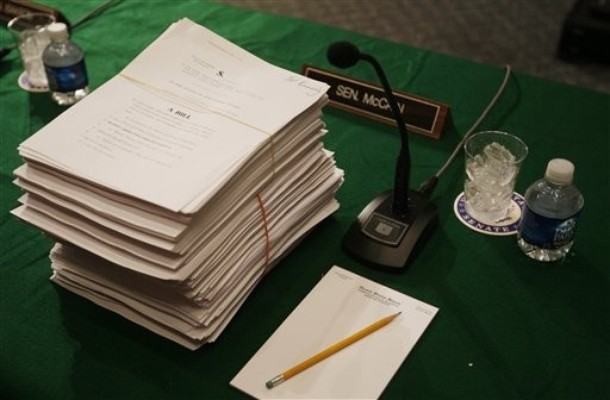
Now, onto the big questions:
Does the House's health care reform bill do enough on cost control?
This is the fundamental question and it's a difficult one to answer, because it is extremely arduous to measure "what's enough." However, I can tell you with conviction that the insurance reforms in this plan: the Exchanges, the public option, MedPAC, etc. will certainly help and, at the very least, start significant groundwork. Jon Gruber, a health economist at MIT, recently said:
"What we know for sure the bill will do is that it will lower the cost of buying non-group health insurance. ...We know we will be closer to bending the curve with this bill than without it. But we can't promise this bill alone will bend the curve. This bill moves us towards that. ...I think this is as much as you can do politically. It's as much as you can do without sinking the whole bill, which is what happened to every other health-care reform. ...People say you can't do coverage without cost control. I think it's the opposite. You can't do cost control before coverage. We would do a huge amount for the cause of cost control just by covering people. ...It does real things on cost control, and then it does real things to make cost control more politically viable. It lays the groundwork for doing more. To kill this bill for not doing enough on cost control would be like criticizing the Yankees for not winning the Super Bowl."That is the most honest portrayal of the cost argument with regards to the health care reform legislation that is currently moving through congress that I've seen thus far. So, is it doing enough to bend the cost-curve? Immediately, probably not. Is this one of the best starting points to bend the cost-curve in the right direction in the near future? Absolutely. Are there Republican proposals out there right now that would bend the cost-curve more effectively than this one? Hell no.
And remember that this portion is more about bending the cost-curve of health care in the future, I'm not talking about immediately lowering prices. Lowering prices will be taken care of through increased competition and competency in the new insurance marketplace: the Exchange. However, the projection of lowering costs in the short-term and bending the cost-curve in the long-term are extremely hard to estimate according to the CBO, but (not to mention effectively reducing the deficit) a public plan -- even at negotiated rates -- does a lot for reducing cost in the short-term, as well as long-term. So if anybody tells you that this legislation doesn't do enough to bend the cost-curve, ask them where the alternative proposals to bend it more effectively are, and make sure they know that this is a great and necessary first step.
[Quick Update (11/21/09): Since the Senate bill was released, they actually have cost-control measures that do even better things than the House bill does. For one example, The Joint Committee on Taxation's numbers show that workers will make $300 billion more in wages due to the Senate Bill's Cadillac Tax. By 2019, it's $1,000 per household. This is even one more reason to vote for the House bill to move the process forward. Once the House and Senate bills become merged, it will do even more for cost-control.]
What would the House's version of the public option do?
Many progressives (including myself) are upset that the public option is slightly weaker than we wanted it to come out of the House. The more robust a public option -- the most it does for cost control (and the more it reduces the deficit). Either way, a weaker public option is still better than nothing. A public plan (even with negotiated rates) would place “downward pressure on the premiums of private plans" according to the CBO. As Jacob Hacker, a professor of Political Science at Yale puts it, the public option "is vital as an institutional check on private plans, its role evolving to reflect the emerging weaknesses (or strengths) of regulated private competition. Put simply, health reform is much more likely to succeed with a public health insurance option, even one with negotiated rates, than if private insurers are left to run the show."
First off, a public insurance plan -- confirmed by the CBO -- would have far lower administrative costs than private insurance plans, which would already take a great hack at lowering prices, because more money could be spent directly on patient care. The gist of "negotiated rates" means that Health and Human Services Secretary, Kathleen Sibelius, will be able to negotiate reimbursement rates with hospitals either at private insurance levels, or as low as she can make them (the legislation prohibits the rates of the public option to be higher than private insurance rates). Since the public plan should be able to obtain more favorable rates, it will lower its premiums and, through competition, bring down private plan rates.
Private insurers overpay preferred providers at least in part because it’s a way for the insurers to keep competitors out of the market, but if a public plan is now in the mix, the game changes, and insurers may finally feel pressure to drive greater efficiencies. This is not to mention that, the lower the public plan rates become, the more people will join it, therefore making it stronger and -- since it is not-for-profit -- the stronger it gets, the lower the rates can be. So the lower the public option's rates are, the lower the private insurance plan's rates will become, based on the "downward pressure" that the CBO states the public option would have on private insurers. So, yes, it's worth it. It is the simple, most effective way to bring down cost that has been presented thus far (besides instituting a single-payer system) and it will be the most effective way to reduce cost -- which is why progressives are holding onto it for dear life.
Isn't a government-run insurance drive all the other private insurance companies out of business?
No. I'm not going to spend much time on this, because it's ridiculous. The CBO predicts that approximately 6 million people will end up on the public plan in the House bill after it's instituted in 2013. That's about 2% of the country. If an insurance company that will likely hold only 2% of the country in its plan is able to drive other private insurers out of business, then we were headed down an even worse road than we thought, because it means that the private insurance industry is so weak that they can almost literally compete with nothing. The CBO makes this estimate, because the public option would only be available to people that are uninsured and do not become covered by the employee or individual mandates in the bill.
Doesn't an individual mandate mean that I'll have to purchase insurance that I can't afford?
No -- very simply put. If you look at the subsidies that will be offered based on the poverty lines, the subsidies are very generous -- and if you can't afford coverage, it will either cover you completely or get you extremely close to being covered, so you'll only have to pay a nominal amount. The only people that will be forced to purchase insurance without subsidies are people higher than 400% of the poverty line that clearly have the money to purchase insurance, but simply choose not to. Having these people insured will save American taxpayers money in the future, because you will no longer be fronting the bill for all of the uninsured folks that still acquire medical treatment from emergency rooms across America.
Won't this bill bankrupt the country?
Not at all. The CBO estimates that the current House version of the bill will actually reduce the federal deficit by $104 billion over 10 years -- and even more after that. (Not to mention that the Republican alternative only reduces the deficit by $68 billion. I'm sure when that CBO report was released, it was a sad day for conservatives across the country.)
Is this bill a handout to the insurance industry?
Yes and no. The 'yes' part is why Dennis Kucinich voted against this bill. (And, just to be sure, if you haven't already, you should also take a look at my post as to why Kucinich's reasoning for voting against HR 3962 is light years away from any Republican reasoning, because it was the most ridiculous argument I've heard in a long time.)
The House's legislation is certainly a partial handout to the insurance company, because it is injecting approximately 20 million new customers into their industry, so they stand to make profit off of this exchange. However, unless you completely change the current system (which most Americans seem to be against), there's no way that you can make strides in health care reform, since such a major part of it is covering as many Americans as possible. And if this were such an obvious handout to those companies, why would the insurance industry be fighting tooth-and-nail against it, spending $173 million as of August to try and defeat the cost-reduction aspects of the plan? Because, simply put, they want the new customers (obviously), but they want nothing else that comes along with this bill. They don't want any of the new consumer-protection regulations or anything that makes them have to compete more with other companies -- especially a government-run plan. The fact is that they know this bill will make them lower their costs (by competition) and increase their care (by law) and they don't like it one bit.
Dennis Kucinich would have definitely voted for the bill if the public option was so strong that it absorbed all 31 million uninsured Americans and was completely funded by the tax-payer. And if that were the case, it wouldn't be a handout to the insurance companies at all and everybody would still be covered. However, since America (unfortunately) has shown that they don't support a single-payer system at this time, the public option was specifically designed, so that it wouldn't drive private insurance out of business, because they needed to find a compromise that brought down costs, while at the same time, not interfering with peoples' coverage that they liked. And this version of the public option finds that balance quite well, while providing enough competition, so that it can't be complete a handout to the insurance industry.
Ok, maybe all of that stuff you've "proven" with "facts" and "statistics" from non-partisan government analysis centers are true, but bottom line is that this bill will kill my Grandparents!
Despite how much Republicans might want this to be true, it's not. It's an understandable talking point for them, because this bill does propose to reform Medicare by cutting $500 billion dollars from it -- but the part that they never seem to mention is that it has nothing to do with patient care. The truth is that the House bill extracts $500 billion from projected Medicare spending over 10 years, as scored by the Congressional Budget Office, by doing such things as trimming projected increases in the program’s payments for medical services, not including physicians.
It also saves billions of dollars finally going through Medicare line-by-line and finally undoing all of the waste, fraud, and abuse that goes on in the system. Also, due to the way the Bush administration set up Medicare Part D, instead of having the drug prescriptions go directly through the government, it was set up through many twists and turns going through both insurance and drug industries, so they can both reap profits off of a government program; the Medicare reform being proposed strips those industries of their profits and saves billions of dollars in the process. And none of the predicted savings come from reducing current or future benefits for seniors. Am I right? If it wasn't true, would AARP have endorsed it?
I know that there are other insane claims about this health care reform package, but the truth is that they are so far-fetched and untrue, just trust me when I say that it's not even worth writing about.
The final point that I want to make is that, while this bill is not perfect, the cost of inaction is far worse. And don't let people like Charlie Dent fool you into believing that this will get done in the future if it's shelved for a little while. Just like history has shown, we will have to again wait for a Democratic President and a Democratic-controlled congress. So maybe it would happen again 20 years down the road? Even more watered down? And we can't wait that long. Even though the bill could be better, Ezra Klein makes a great point for anybody that thinks that the legislation has lost too much in compromise to support it and fears that it doesn't do enough. I would paraphrase, but there's no way that I can rival his perfect language on this, and I agree 100%, so here it is:
This is a misreading of not only the politics of this issue going forward, and also the history of health-care reform going backward. Failure does not bring with it a better chance for future success. It brings a trimming of future ambitions.I tried to approach this in a way that you could see both sides of the argument -- and I think you'll be smart enough to realize that, even with somewhat of a flawed bill, it is very important that we move forward, because (a) the cost of inaction is too great and (b) it is a fundamental first step in the right direction.
Truman sought single payer. His failure led to Kennedy and Johnson, who confined their ambitions to poor families and the elderly. Then came Nixon, whose reform plan was entirely based around private insurers and government regulation. He was followed by Carter, who favored an incremental, and private, approach, and Clinton, who again sought to reform the system by putting private insurers into a market that would be structured and regulated by the government. His failure birthed Obama's much less ambitious proposal, which attempts to reform not the health-care system, but the small group and nongroup portions of the health-care system by putting a small minority of private insurance plans into a market that's structured and regulated by the government, and closed off to most Americans.
Failure does not breed success. Obama's defeat will not mean that more ambitious reforms have "a better chance of trying again." It will mean that less ambitious reformers have a better chance of trying next time.
Conversely, success does breed success. Medicare and Medicaid began as fairly limited programs. Medicaid was pretty much limited to extremely poor children and their caregivers. Medicare didn't cover prescription drugs, or individuals with disabilities, or home health services.
But once the programs were passed into law, they were slowly and continually improved. They became more expansive, with Medicaid growing to cover not only poor families but also poor adults, and the federal government giving states the option, and matching dollars, to include more people under the program's umbrella. Medicare was charged with covering people with long-term disabilities, and it was eventually strengthened with a drug benefit, more preventive coverage, the option of supplementary plans and much more.
It is not hard to imagine health-care reform following a similar path. The exchanges can be opened to all employers and all individuals, creating a competitive insurance market virtually overnight. The public plan could be strengthened, or the government could begin to set payment rates for insurers who participate in the exchange (as is common in other countries). Subsidies could expand, and new funds could be used to encourage the development of integrated care organizations rather than simple insurance companies. The public option could be strengthened and the employer tax exclusion converted, as Ron Wyden has long advocated, into a standard deduction, which would strike at the heart of the employer-based market.
But all that is predicated on the creation of this new, flawed, insufficient system. As any scientist will tell you, it's much easier to encourage something to evolve in a certain direction than it is to create it anew. The idea that a high-profile failure in a moment where a liberal Democrat occupies the White House and Democrats hold 60 seats in the Senate for the first time since the 1970s will encourage a more ambitious success later does not track with the history of this issue, nor with the political incentives that future actors are likely to face. If even Obama's modest effort proves too ambitious for the political system, the result is likely to be a retreat towards even more modest efforts in the future, as has happened in the past.


 Posts
Posts




7 comments:
It's official. I just wrote my first book.
Great piece, Ryan! I'm gone for the rest of the evening but will follow the discussion over the weekend.
Excellent job, Ryan - clear, concise, rational, fact-based. You are right that we all need to not let the perfect become the enemy of the good. With all its flaws (and don't even get me started on the Stupak amendment), this is the closest we've come in my lifetime and, for the economic future of the country, we have to make it happen. Thanks for your first "book".
Thank you for a job well done. I agree with you that the bill in any of the current versions,and probably even with more changes to come,is a very big and important step. We can all disagree in some areas and be upset that it's not as ambitious as we would like it. The hope is that it's just the first step to a better system for the majority.
To Andrea: Hi! Remember me from our Easton encounter? (To the rest of you: Not that kind of encounter.) Glad to see you in the fight.
Ryan, much of the contest is not about the national budget or ideology but about values. To some, responsibly shared prosperity for needs like health care is "socialism" while to others it means the U.S. has a real future on the planet.
Increasingly the language of a new common ground will become part of our culture just as Social Security and Medicare have.
Donald Dal Maso
Ryan - As a politics and policy novice, I am learning so much from you! Thank you!
Ryloc, I compliment you on a well-researched and well-written post. I will link to it tomorrow w/o my usual editorial assessments and let it stand or fall on its own merits.
Now I have to write my own piece.
May the better argument win.
Post a Comment